You know that feeling when you just need a hug from the inside? That’s what a good bowl of miso soup is for me. It’s my go-to when I’m feeling under the weather, when it’s chilly out, or honestly, just any Tuesday night. There’s something magical about how something so simple can taste so deeply comforting and nourishing.
I’ve tried a lot of miso soup recipes over the years, but I kept coming back to the basic, no-fuss method that Chef John is famous for. His style is all about stripping things down to their delicious essentials, and that’s exactly what this recipe does. This version of Chef John’s Miso Soup is my everyday staple—it comes together with just a handful of ingredients in about 20 minutes, but the flavor is anything but basic.
The secret, I’ve learned, is all in the method. It’s not just about tossing things in a pot. Warming the dashi gently, dissolving the miso paste *before* adding it to the broth—these little steps make all the difference between a good soup and a great one. After making this dozens of times, I can tell you it works like a charm every single time. So, grab your pot and let’s make a little bowl of comfort.
Why You’ll Love This Chef John’s Miso Soup
Okay, let me just gush for a second about why this soup is a permanent fixture in my kitchen. It’s one of those recipes that just… works. Here’s why I think you’re going to adore it:
- It’s shockingly fast. From fridge to spoon in about 20 minutes. I’m not kidding. On those nights when I’m tired and hangry, this is my lifeline. It’s faster than waiting for delivery, and it’s a million times better for you.
- The flavor is pure, deep comfort. That dashi broth? It’s the secret weapon. It gives you that savory, umami backbone that makes this taste like the real deal from your favorite restaurant. It’s soothing and complex, not just salty water.
- It’s quietly good for you. We’re talking probiotics from the miso, protein from the tofu, and it’s just so light and clean. It’s the kind of meal that makes you feel nourished and taken care of, not weighed down.
- It’s your blank canvas. This is the perfect base recipe. Once you’ve got it down, you can start playing. Toss in some mushrooms, a handful of spinach, whatever you’ve got. It’s forgiving and wants to be your friend.
Chef John’s Miso Soup Ingredients
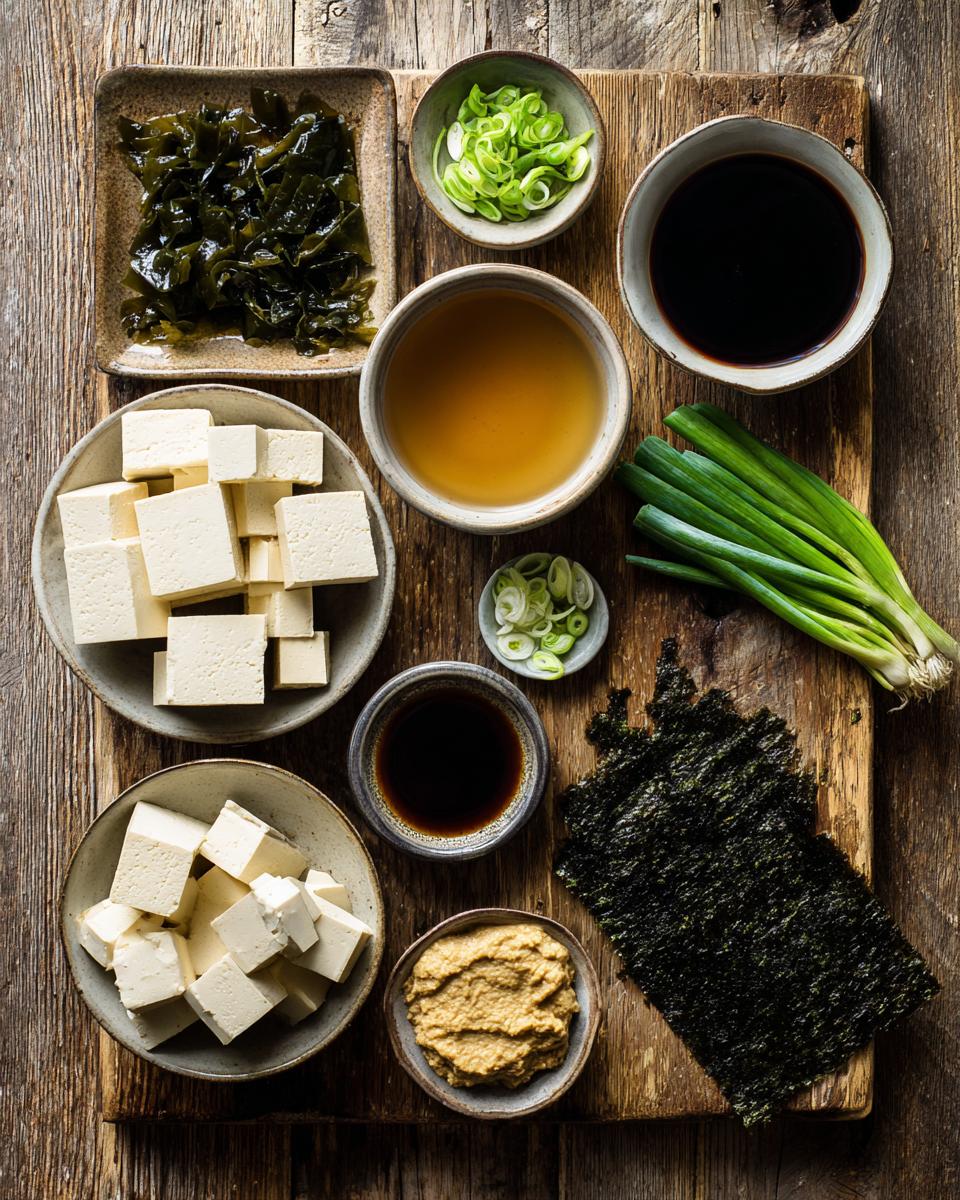
One of the best things about this soup is how few things you need to make something incredible. This is my grocery list for the perfect, basic bowl. Trust me, having these ready to go makes the whole process a breeze.
- 4 cups dashi stock – This is the soul of the soup. Don’t skip it.
- 3-4 tablespoons white or red miso paste – Start with 3, you can always add more.
- 1/2 block (about 7 ounces) firm tofu, cut into small, 1/2-inch cubes
- 2-3 green onions, thinly sliced – the green and white parts!
- 1 sheet nori (dried seaweed), cut into thin strips or small squares (totally optional, but so fun)
- 1-2 teaspoons soy sauce (optional, to taste) – I usually skip it, but it’s there if you want it.
Ingredient Notes & Substitutions
Let’s talk about these ingredients, because I’ve learned a few tricks about each one that really makes a difference.
First up, the dashi stock. Look, I’m all for making it from scratch with kombu and bonito flakes when I have time. But on a regular Tuesday? I reach for the instant dashi powder or granules. It’s in most Asian grocery stores, and even some big supermarkets now. Just follow the package to make 4 cups of broth. It’s a fantastic shortcut that doesn’t sacrifice flavor.
Now, the miso paste. This is where you can make the soup your own. White miso (shiro miso) is milder, sweeter, and a little salty—it’s my go-to and a perfect place to start. Red miso (aka miso) is fermented longer, so it’s darker, saltier, and has a deeper, almost pungent flavor. I love it for a heartier bowl. You really can’t go wrong with either. Just taste as you go!
For the tofu, firm is the way to go. Silken will just fall apart on you. A little pro tip: give the block a gentle press between some paper towels to soak up extra water before you cube it. This helps the tofu hold its shape and really soak up the broth’s flavor. And green onions are just scallions by another name—use the whole thing, from the white base up to where the green starts to get dark.
Finally, the nori. That’s the same seaweed they use for sushi rolls. If you have some, tearing a sheet into little bits over the top of your finished bowl adds this amazing briny, oceanic whisper and a bit of texture. It’s a garnish, so don’t stress if you don’t have it. The soup is still absolute perfection without it.
Essential Equipment for Chef John’s Miso Soup
Okay, let’s talk gear for a second. One of the reasons I make this soup so often is that I don’t need to dig out any fancy gadgets. You probably have everything you need already sitting in your kitchen drawers. It’s just a few simple tools that make the process smooth and, honestly, kind of therapeutic.
Here’s my go-to lineup:
- A medium saucepan (about 2-3 quarts): This is your soup’s home. You want something with a nice heavy bottom if you have it, so the heat distributes evenly and you don’t risk scorching your precious dashi. But honestly, any decent pot will do the job.
- A small bowl and a whisk (or a fork!): This is the secret handshake for perfect miso soup. You cannot just plop the miso paste directly into the hot broth. It’ll clump up into weird salty blobs. Trust me, I’ve made that mistake so you don’t have to. A little bowl and a whisk let you dissolve it smoothly into a silky slurry first. No whisk? A fork works just as well. I use mine all the time.
- A good chef’s knife and cutting board: For cubing that tofu and slicing the green onions into those pretty little rings. A sharp knife makes this part quick and safe.
- A ladle: For serving! There’s something so satisfying about ladling the hot soup into a bowl. It just feels right.
See? Nothing special. No immersion blenders, no food processors. Just basic, humble tools that help you create something really wonderful. Now let’s get to the fun part—actually making it.
How to Make Chef John’s Miso Soup: Step-by-Step Guide
Alright, here’s where the magic happens. Making this soup is less about cooking and more about gentle assembly. It’s a process of building flavors without messing them up. I’ve made this so many times I could do it in my sleep, but I still take my time with these steps because each one matters. Follow along with me, and you’ll have the most perfect, silky, flavorful miso soup in no time.
Step 1: Prepare Your Broth Base
First things first, grab your medium saucepan. Pour in all 4 cups of your dashi stock. Now, turn the heat to medium. We’re going to warm it up until it’s just barely simmering. You’ll see little bubbles start to form around the edges of the pot. This is your cue.
Here’s the big rule right from the start: do not let this boil. I’m serious! A rolling boil is too aggressive for what we’re doing. We’re just gently waking up the flavors in the dashi. If it starts to bubble too enthusiastically, just nudge the heat down a bit. Think of it as a warm bath, not a hot tub. This gentle heat protects the delicate flavors and sets us up perfectly for the next step.
Step 2: Dissolve the Miso Paste
This step is the secret to a smooth, lump-free soup. While your dashi is warming up, grab a small bowl and your miso paste. Scoop out 3 to 4 tablespoons—I always start with 3 and add more later if I want it stronger.
Now, carefully ladle a few spoonfuls of the warm (not boiling!) dashi from the pot into the bowl with the miso. Maybe a quarter cup or so. You just need enough liquid to work with. Then, take your whisk or a fork and go to town. Whisk it like you mean it, scraping the sides and bottom of the bowl, until that paste is completely dissolved. You should end up with a smooth, creamy, almost gravy-like mixture. No lumps allowed! This little trick ensures the miso blends seamlessly into the whole pot instead of turning into weird, salty globs. It’s a game-changer, I promise.
Step 3: Combine and Finish Your Soup
Okay, the broth is warm and the miso is a smooth slurry. Time to bring it all together. Turn the heat down to low if you haven’t already. Now, pour that beautiful dissolved miso mixture back into the pot with the rest of the dashi. Stir it gently with a spoon—you’ll see the broth transform instantly into that gorgeous, cloudy miso soup color.
Next, gently add your cubed tofu. I like to slide them in so they don’t splash. Let the tofu just hang out in the warm soup for a minute or two. We’re not trying to cook it, just heat it through. This is also when you’d add any heartier extras like mushrooms.
After about two minutes, take the pot off the heat completely. This is crucial! We never want to boil the soup after the miso has been added. High heat can wreck its lovely flavor and good-for-you enzymes. Now, stir in your pile of sliced green onions. They’ll wilt perfectly in the residual heat, staying bright and fresh.
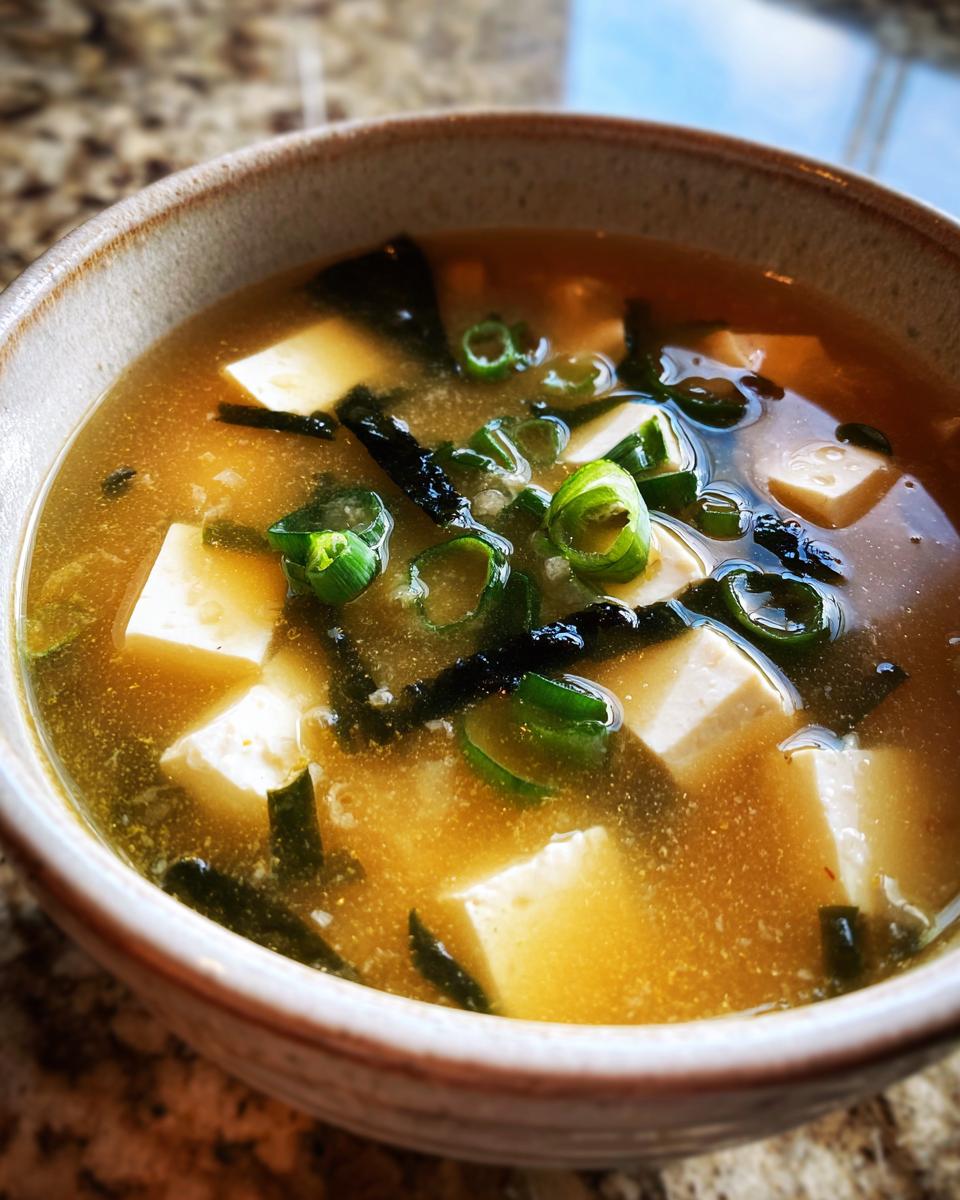
And you’re done! Ladle it into bowls right away. Tear a little nori over the top if you’re using it—it adds a wonderful salty crunch. Then, take that first spoonful. That’s it. You’ve just made a bowl of pure, simple comfort.
Chef John’s Miso Soup Pro Tips for Success
Alright, you’ve got the basics down. But after making this soup more times than I can count, I’ve picked up a few little tricks that take it from “really good” to “oh wow, I made this?” level. These are my non-negotiable, learned-the-hard-way tips for total success.
Never, ever let it boil after the miso goes in. I know I already said it, but I’m going to say it again because it’s that important. Once you stir that dissolved miso slurry into the pot, treat the soup like a delicate creature. Keep it on low heat, or better yet, take it off the burner completely to add your tofu and green onions. Boiling kills the complex flavor of the miso and zaps the good probiotics. We want gentle warmth, not a raging boil.
Taste, taste, taste! Miso pastes vary wildly in saltiness and intensity. Start with 3 tablespoons dissolved into your broth. Give it a stir, then ladle out a little spoonful (let it cool for a sec!). Is it flavorful enough for you? If not, dissolve another half tablespoon in a bit more warm broth and stir it in. You can always add more, but you can’t take it out. This is how you make the soup perfectly yours.
Think about texture and timing for add-ins. If you’re adding mushrooms, slice them thinly and pop them in with the tofu to soften up. For something like spinach or wakame seaweed, stir it in right at the end, after you’ve taken the pot off the heat. The residual heat will wilt them perfectly without turning them to mush. It’s all about giving each ingredient the right amount of love.
Hold the soy sauce until the very end. The recipe lists it as optional, and here’s why: a good dashi and miso combo is usually salty enough on its own. Always, always taste your finished soup first. Only then, if you feel it needs a tiny extra hit of salty-umami, add a few drops of soy sauce. You’d be surprised how often you don’t need it!
Prep your tofu like a pro. This is a tiny step that makes a big difference. After you cube your firm tofu, spread the pieces out on a few layers of paper towel and give them a very gentle press. This absorbs excess water so the tofu doesn’t water down your beautiful broth and helps it soak up more of that miso flavor. It’s the difference between a bland cube and a flavorful one.
Customizing Your Chef John’s Miso Soup
Okay, here’s my favorite part about this recipe—it’s basically a friendly, delicious blank canvas. Once you’ve mastered the basic bowl, you can start playing around. Think of the recipe we just made as your cozy, reliable base camp. Now, let’s explore a little! These are a few of my go-to twists that feel special but are still super simple.
Mushroom Magic: This is my number one upgrade when I want something a bit heartier. Right after you add the dissolved miso back to the pot, toss in a handful of thinly sliced shiitake or cremini mushrooms along with the tofu. Let them simmer in that warm broth for the full 2-3 minutes. They soak up the savory flavor and add this wonderful, almost meaty texture. It turns the soup into a light meal all by itself.
The Green Boost: Sometimes I just want to feel extra virtuous. In the last 30 seconds, after you’ve taken the pot off the heat, stir in a big handful of fresh spinach or baby kale. I mean, really pack it in there—it wilts down to nothing! The heat from the soup will cook it perfectly, leaving it bright green and tender. You get that fresh flavor and a hit of nutrients without any extra pots to wash. A little sprinkle of sesame seeds on top here is *chef’s kiss*.
The Flavor Finisher: This isn’t so much an add-in as a finish line celebration. Right after you ladle the soup into your bowl, add just a few drops—and I mean drops—of toasted sesame oil or a tiny drizzle of chili oil (like Lao Gan Ma). Don’t stir it into the whole pot; do it per bowl. The oil will swirl on the surface, and every other spoonful you’ll get this incredible, fragrant, nutty or spicy note. It’s a total game-changer and makes it feel restaurant-fancy.
The beauty of this soup is that it welcomes your creativity. Got some wakame seaweed? Throw a pinch in with the tofu. Leftover cooked rice? Plop a scoop in the bottom of your bowl before you pour the soup over it. The only rule is to have fun and taste as you go. It’s your bowl of comfort, after all!
Serving and Storing Chef John’s Miso Soup
You’ve made this beautiful, steaming bowl of soup, and now comes the best part: enjoying it! But I also know life happens, and sometimes you don’t finish the whole pot. No worries at all. Here’s exactly how to handle both the serving and the saving, so every spoonful is as good as it can be.
Serving it up right: This soup is meant to be eaten immediately, the moment it’s done. I’m talking, ladle-it-straight-into-the-bowl-and-carry-it-carefully-to-the-table immediate. That’s when the green onions are at their brightest and the broth is at its silky best. I love it as a simple starter before a bigger meal, but honestly, my favorite way is to make it a light lunch or dinner. Just pour it over a bowl of steamed white or brown rice. The rice soaks up the savory broth, and the tofu and veggies make it feel complete. It’s the most comforting 10-minute meal I know.
The storage lowdown: Got leftovers? Perfect! Let the soup cool down to room temperature on the counter—don’t leave it out for more than an hour or two, though. Then, pop it into an airtight container and stash it in the fridge. It’ll keep beautifully for about 2 days.
Now, reheating is key. Do not, I repeat, do not microwave this soup or boil it on the stove. The high, uneven heat from the microwave can make the tofu rubbery and ruin the miso’s flavor. Instead, pour your leftovers into a small saucepan and reheat it over the lowest possible heat on your stove. Warm it gently until it’s just hot enough to eat, stirring occasionally. You might notice the tofu firms up a tiny bit and the broth separates a little after chilling—that’s totally normal. A quick, gentle stir brings it all back together. Just remember: low and slow is the way to go. It keeps all that delicate flavor and goodness perfectly intact.
Chef John’s Miso Soup Nutritional Information
I’ll be totally honest with you—I don’t count calories when I’m making a bowl of this soup. To me, it’s a bowl of simple, wholesome ingredients that just make me feel good. Because of that, I don’t provide a precise nutritional calculation here. Why? Well, the numbers can change a lot depending on the specific brands of miso and dashi you use, how much tofu you add, or if you throw in any extra veggies. A darker red miso might have more sodium than a white one; different dashi powders have different ingredients. My best advice is to think of this as a light, nourishing base made from fermented soybean paste, tofu, and seaweed broth—it’s packed with protein, gut-friendly probiotics, and comforting flavor, without any fussy numbers attached.
Chef John’s Miso Soup FAQs
I get it—even the simplest recipes can leave you with a few questions. After making this soup for years and chatting with friends who’ve tried it, I’ve heard the same things come up. So, let’s tackle them head-on. Here are the answers to the questions I get asked the most.
Can I use vegetable broth instead of dashi?
You can, but I have to be honest, it won’t be the same. Dashi is what gives this soup its authentic, deep umami soul. It’s a specific flavor that vegetable broth just doesn’t replicate. If you’re in a real pinch, a mild veggie broth will work in a technical sense, but the flavor will be much simpler and less complex. My strong recommendation? Seek out instant dashi powder or granules—it’s a total game-changer and so easy to use.
What is the best type of miso paste for beginners?
Hands down, start with white miso (shiro miso). It’s milder, a little sweeter, and less salty than the darker varieties. It gives you that classic, comforting miso soup flavor without any overwhelming fermented notes. It’s the perfect friendly introduction. Once you’re hooked, then you can experiment with red or yellow miso for a deeper, more robust bowl.
Can I make this soup ahead of time?
You can, but with a big, important caveat. You should prepare the components ahead, not the finished soup. Make your dashi broth and cube your tofu, then store them separately in the fridge. When you’re ready to eat, warm the dashi, dissolve your miso paste in a little of it, and finish the soup fresh. Why? Because if you cook the miso and then store and reheat the whole pot, the flavor dulls and the texture can get a bit grainy. For the brightest, freshest taste, it’s best made just before serving.
Why should the soup not boil after adding miso?
This is the golden rule! Boiling is too harsh for the delicate miso. High heat breaks down its complex flavors, making it taste flat and one-note salty. More importantly, it destroys the live, beneficial cultures (probiotics) that make miso so good for you. We’re aiming for gentle warmth to preserve all that wonderful flavor and goodness. Think of it as just heating the soup through, not cooking it.
How do I store leftovers?
Let the soup cool to room temperature (but don’t leave it out longer than 2 hours), then pop it into an airtight container in the fridge. It’ll keep for about 2 days. When reheating, be gentle! Warm it in a saucepan over the lowest heat possible, stirring occasionally, until it’s just hot. Don’t let it boil. The tofu might firm up a bit and the broth may separate slightly after chilling—just give it a good stir, and it’ll come right back together.
Your Perfect Bowl Awaits
And that’s it! You’ve got everything you need to make the most comforting, soul-warming bowl of soup right in your own kitchen. I truly hope you give this recipe a try. It’s become such a happy little ritual for me, and I’d love for it to become one for you, too.
When you make it, come back and tell me all about it! Did you stick with the classic version, or did you get creative with mushrooms or a drizzle of sesame oil? I want to hear your story. Leave a comment below and let me know how it went—and if you loved it, give the recipe a rating! It helps other home cooks just like you find their new favorite bowl of comfort. Now, go warm up that pot. Your perfect bowl is waiting.
Print
Chef John’s Miso Soup
- Total Time: 20 minutes
- Yield: 4 servings 1x
- Diet: Low Calorie
Description
A simple and flavorful miso soup made with dashi stock, miso paste, and basic ingredients. This recipe creates a comforting and nourishing bowl of soup.
Ingredients
- 4 cups dashi stock
- 3–4 tablespoons white or red miso paste
- 1/2 block (about 7 oz) firm tofu, cut into small cubes
- 2–3 green onions, thinly sliced
- 1 sheet nori (dried seaweed), cut into thin strips or small squares (optional)
- 1–2 teaspoons soy sauce (optional, to taste)
Instructions
- Heat the dashi stock in a medium pot over medium heat until it simmers. Do not let it boil.
- Place the miso paste in a small bowl. Add a few tablespoons of the warm dashi stock to the bowl and whisk until the miso is completely dissolved and smooth.
- Add the dissolved miso mixture back to the pot of dashi stock. Stir gently to combine.
- Add the cubed tofu to the soup. Let it heat through for 1-2 minutes.
- Remove the pot from the heat. Stir in the sliced green onions.
- Ladle the soup into bowls. Garnish with nori strips if using. Serve immediately.
Notes
- Do not let the soup boil after adding the miso, as high heat can destroy its beneficial enzymes and alter the flavor.
- Adjust the amount of miso paste to your taste preference.
- For a heartier soup, you can add thinly sliced mushrooms or wakame seaweed along with the tofu.
- Prep Time: 10 minutes
- Cook Time: 10 minutes
- Category: Soup
- Method: Simmering
- Cuisine: Japanese
Nutrition
- Serving Size: 1 cup
- Calories: 80
- Sugar: 2g
- Sodium: 850mg
- Fat: 3g
- Saturated Fat: 0.5g
- Unsaturated Fat: 2g
- Trans Fat: 0g
- Carbohydrates: 7g
- Fiber: 2g
- Protein: 6g
- Cholesterol: 0mg